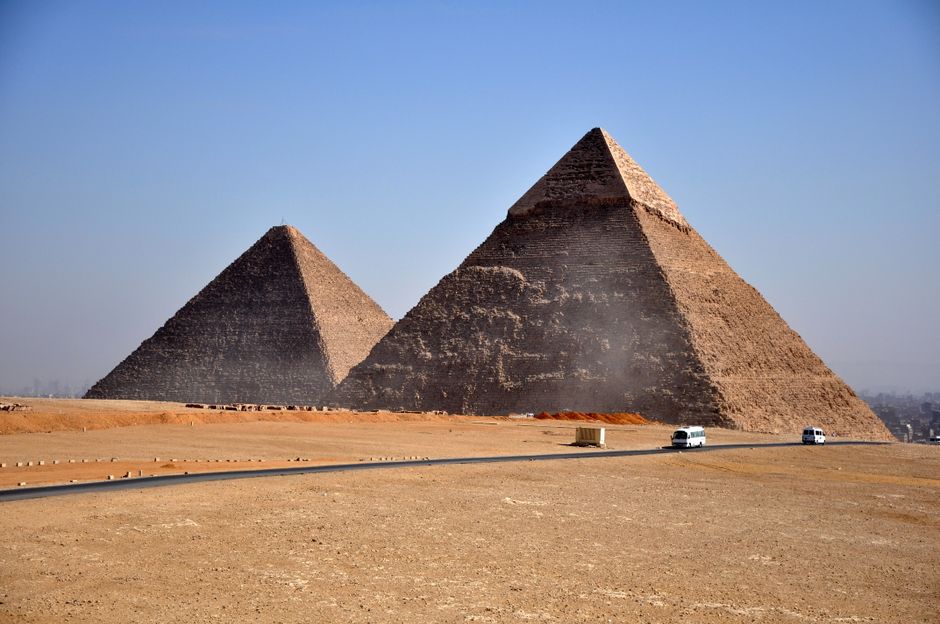
Ancient Egyptian Pyramids: Construction and Purpose
The pyramids of ancient Egypt stand as enduring testaments to a civilization’s capacity for organization and belief. These monumental structures, primarily built during the Old Kingdom period (circa 2686–2181 BCE), served as royal tombs and complexes for the afterlife. Their construction involved sophisticated engineering, a well-coordinated labor force, and deep religious convictions centered on the pharaoh’s journey into eternity. Understanding how and why they were built offers insight into the priorities and capabilities of one of history’s most remarkable societies.
Investigating pyramid construction requires examining the available evidence, from archaeological remains to ancient texts. Modern research suggests that these feats were not the product of slave labor but rather of skilled workers and rotating peasant labor, organized by a centralized state. The religious significance of the pyramid was paramount: it was not merely a tomb but a machine for resurrection, ensuring the pharaoh’s ascent to the gods and the continued order of the cosmos. Chronicle Press presents this exploration of the engineering, labor, and spiritual dimensions of Egypt’s iconic monuments.
This article delves into the methods and meanings behind the pyramids, drawing on current scholarship to provide a balanced view. It explores the engineering techniques that made such massive structures possible, the labor organization that sustained decades-long projects, and the religious beliefs that motivated their creation. By examining these aspects, we gain a clearer picture of how ancient Egyptian society mobilized resources and faith to build for eternity.
Engineering Techniques and Construction Methods
The engineering behind the pyramids evolved over centuries, culminating in the Great Pyramid of Giza, built for Pharaoh Khufu around 2560 BCE. This structure, originally 146.6 meters tall, consists of approximately 2.3 million limestone blocks, each weighing an average of 2.5 tons. The precision of its construction is remarkable: the base is level to within 2.1 centimeters, and the sides are aligned with the cardinal directions to within a fraction of a degree. Such accuracy suggests advanced knowledge of surveying, mathematics, and astronomy.
Scholars have proposed various methods for moving and placing the massive stones. The most widely accepted theory involves the use of ramps, possibly a combination of straight and spiral ramps, to haul blocks into position. Experiments and archaeological evidence, such as the discovery of ramp remains at other sites, support this approach. Another technique involves the use of sledges pulled by workers over lubricated surfaces, as depicted in tomb paintings. The internal structure of the pyramids, including chambers and relieving arches, also demonstrates a sophisticated understanding of load distribution and stress management.
The construction process likely began with site preparation, including leveling the bedrock and cutting trenches for the foundation. Quarrying the limestone and granite blocks required precise tools and a deep knowledge of stone properties. Copper tools, such as chisels and saws, were used to shape the stones, while wooden mallets and stone hammers aided in extraction. Transporting granite from Aswan, over 800 kilometers away, involved river barges during the Nile flood season. Once on site, the blocks were moved via ramps and possibly levers, with workers using ropes and sledges. The coordination of these tasks required careful planning and logistics.
After the core was built, the pyramid was covered with fine white limestone casing stones, creating a smooth, gleaming surface. These casings were cut to precise angles to fit together seamlessly. The capstone, or pyramidion, was often gilded and placed at the apex. The entire process demanded not only technical skill but also a strong organizational framework to manage the supply chain, from quarries to the construction site.
Labor Organization and Workforce
Contrary to popular belief, the pyramids were not built by enslaved people. Evidence from worker villages, such as the one near the Giza plateau, indicates that the labor force consisted of skilled craftsmen, architects, and rotating contingents of peasants. These workers were likely paid in rations of bread, beer, and other goods, and they received medical care. The workforce was organized into teams with specific tasks, as shown by graffiti on blocks that name work gangs like “Friends of Khufu” and “Drunkards of Menkaure.”
The size of the workforce is a subject of debate. Estimates range from 20,000 to 30,000 workers at any given time, with the total number of people involved over the years being much larger. This labor was not a permanent standing army but rather a rotating levy of peasants, who worked during the inundation season when farming was impossible. This system allowed the state to mobilize a massive workforce without disrupting agriculture. The workers lived in barracks near the construction site, with bakeries and breweries supplying their daily needs.
Organization was hierarchical and efficient. Overseers directed gangs, scribes recorded rations and progress, and architects designed the structures. The title “Overseer of All Construction Projects of the King” indicates a high-ranking official responsible for the entire operation. The labor was not merely coerced; many workers took pride in their contribution to a sacred endeavor, as evidenced by the care taken in their burials near the pyramids. This suggests a level of voluntary participation and national identity tied to the pharaoh’s grand project.
Religious Significance and Purpose
The primary purpose of the pyramid was religious: it served as a tomb and a vehicle for the pharaoh’s afterlife. Ancient Egyptians believed that the pharaoh was a mediator between the gods and humanity, and his successful journey to the afterlife ensured the continued harmony of the cosmos. The pyramid’s shape, with its sloping sides converging at a point, symbolized the primeval mound from which the world emerged and the sun’s rays descending to earth. This connection to solar theology, particularly the cult of Ra, reinforced the pharaoh’s divine status.
Within the pyramid complex, mortuary temples and causeways facilitated rituals and offerings. The pharaoh’s body was prepared through mummification and placed in a sarcophagus within the burial chamber. The walls of later pyramids contain the Pyramid Texts, the oldest known religious writings, which provided spells and instructions for the afterlife. These texts emphasize the pharaoh’s ascent to the sky and his union with the gods. The entire complex was designed to be a self-contained machine for eternal life, with priests performing daily rituals to sustain the pharaoh’s spirit.
The construction of a pyramid also served political and economic functions. It centralized resources, provided employment, and demonstrated the pharaoh’s power and piety. The monumental scale communicated the state’s ability to command labor and materials, reinforcing social hierarchy. However, the religious dimension remained paramount, as the pyramid was believed to be a living entity that ensured the pharaoh’s eternal existence. This belief system motivated the immense investment of resources and time.
Legacy and Modern Interpretations
Today, the pyramids continue to captivate researchers and the public alike. Modern technology, such as muon radiography and 3D scanning, has revealed hidden chambers and construction details without damaging the structures. These findings refine our understanding of how the pyramids were built and their role in ancient society. The pyramids also raise questions about sustainability and resource management, as they required immense quantities of stone, wood, and water.
Chronicle Press notes that the study of pyramids extends beyond Egyptology, influencing fields like architecture and organizational theory. The ability to coordinate thousands of workers over decades offers lessons in project management and logistics. Moreover, the pyramids serve as a reminder of the intersection of faith and engineering, where belief in the afterlife drove technological innovation. As research continues, new discoveries may further illuminate the methods and motivations behind these enduring monuments.
In conclusion, the ancient Egyptian pyramids represent a remarkable convergence of engineering prowess, labor organization, and religious devotion. Their construction was a national endeavor that required precise planning, skilled workers, and a deep spiritual purpose. By examining the evidence, we gain a more nuanced appreciation of how ancient Egyptians built for eternity, leaving a legacy that continues to inspire awe and inquiry.